


The AI PC conversation has moved beyond keynote buzzwords. For business users, the real test is simpler: can the machine make work faster, safer and less painful without adding another layer of complexity?
With the ExpertBook Ultra, ASUS is positioning its flagship AI business laptop as more than a spec-sheet flex. It is a statement about where professional computing is heading — lighter hardware, smarter on-device intelligence, enterprise-grade security and tools designed around the way modern teams actually work.
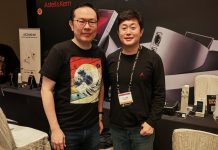
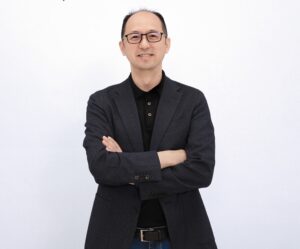
NXT speaks with Rex Lee, Corporate Vice President of ASUS, to unpack what flagship really means, why Singapore matters as a workplace-tech market, and how ASUS is thinking about trust in the AI PC era.
Q: The ExpertBook Ultra is being positioned as ASUS’s flagship AI business laptop. What does “flagship” really mean here beyond specs, and what makes this the clearest expression of ASUS’s vision for the future of work?
The ExpertBook Ultra is our flagship AI business laptop, and that means more than specifications. It reflects ASUS’s vision of the next-generation work device—bringing together AI-powered productivity, enterprise-grade security, and uncompromising mobility in a single, cohesive experience. As AI becomes part of everyday workflows, professionals need devices that can run AI applications efficiently while maintaining control over data privacy and security. That is why on-device AI is central to our approach.
At the same time, today’s workforce is increasingly mobile and distributed. The ExpertBook Ultra combines strong performance with a thin, lightweight design, enabling professionals to stay productive from anywhere without compromising reliability or security.
In many ways, it represents our goal to build business PCs that are intelligent, secure, and designed for the realities of modern work.
Q: We’re hearing a lot about AI PCs across the industry. From ASUS’s perspective, what are the genuinely useful AI features modern professionals will feel in daily use, rather than just see on a keynote slide?
There’s a lot of discussion about AI, but what matters is whether it helps people do their jobs better. The most useful AI features are the ones professionals use every day, such as meeting summaries, real‑time transcription and translation, content creation assistance, intelligent search, and enhanced video conferencing.
What’s exciting about AI PCs is that many of these capabilities can now run directly on the device, making them faster, more responsive, and more secure. Ultimately, the best AI is invisible — it saves time, automates routine tasks, and helps people focus on more meaningful work rather than adding another layer of complexity. ASUS extends this with Zenni Claw, an Agentic AI platform for secure task‑completion workflows, and MyExpert Meet, which delivers practical AI‑powered meeting transcription and collaboration features professionals will feel every day.
Q: At the launch, there’s a strong focus on enterprise productivity, security and manageability. Which of those three areas do you think businesses in Asia Pacific are underestimating most right now?
I would say security. As organisations adopt AI and handle increasing amounts of data, the risks are becoming more complex and sophisticated. Many businesses still focus primarily on productivity gains without fully considering how to protect sensitive information and ensure compliance.
What’s encouraging is that we’re seeing more organisations recognise the importance of security‑by‑design, where protection is built into the device, hardware, and software from day one. As AI becomes more prevalent, security will be just as important as performance in determining the success of digital transformation initiatives. ASUS reinforces this with Zenni Claw, an Agentic AI platform that ensures task‑completion workflows run safely within secure guardrails, and MyExpert Meet, which delivers AI‑powered meeting transcription and collaboration features while keeping sensitive enterprise data under local control.
Q: Singapore is a market with a highly mobile, digitally mature workforce. How did that shape the way ASUS thought about the ExpertBook Ultra and the broader Expert Series strategy?
Singapore has long been a leader in digital adoption, with a workforce that is highly mobile, connected, and productivity-focused. As a result, expectations for business devices are higher than ever; they need to be lightweight and portable, yet still deliver strong performance, enterprise-grade security, and easy manageability.
These expectations have directly influenced the development of the ExpertBook Ultra and our broader Expert Series strategy. Our focus is on creating devices that enable professionals to work seamlessly across different environments while benefiting from the latest AI capabilities, robust security, and reliable performance.
In many ways, Singapore offers a glimpse of where workplaces across the region are heading. The demand for greater mobility, smarter productivity tools, and stronger security is helping shape our vision for the future of business computing.
Q: Durability is a big part of the launch. In real-world terms, what kinds of stress or use cases are these machines actually being designed to survive, and why does that matter more today than it did five years ago?
Durability today is about real-world usage, not just lab tests. These devices are designed to handle everyday pressures such as being carried between home, office, and travel environments, frequent opening and closing of the lid, long working hours, and the occasional bump or knock that comes with mobile work.
ExpertBook Ultra is tested to MIL-STD 810H military standards and undergoes ASUS’s Superior Durability Tests — including panel pressure up to 28 kg, 50,000 hinge cycles, 10 million keystrokes, 120 cm drop survival, spill resistance up to 66 cc, and withstand 100 kg weight on top cover. On top of that, its nano-ceramic technology makes the chassis scratch-resistant, stain-resistant, and fingerprint-resistant.
The practical benefit for users is simple: a laptop that maintains its premium, professional look and reliable performance even after years of constant mobility, making durability a key part of productivity today.
Q: ASUS has strong consumer credibility, but commercial PCs are a different game. As you lead APAC Commercial Business, what is the biggest mindset shift ASUS has had to make to win more seriously in enterprise?
The biggest mindset shift has been moving from building great individual products to building trust at scale.
In consumer, success is driven by innovation and performance in a single device. In enterprise, those matter too, but they’re not enough. Businesses also care about consistency across large fleets, long-term reliability, security, and how easily devices can be deployed and managed.
That has made us think more about the full lifecycle, from procurement and rollout to management and support, and to work more closely with IT teams and channel partners.
In enterprise, it’s not just about winning with a product. It’s about earning confidence over time.
Q: AI-ready laptops promise smarter workflows, but they also raise questions around privacy and trust. How is ASUS thinking about the balance between intelligent features, on-device processing and enterprise-grade security?
We see AI, privacy, and security as tightly connected rather than separate priorities. The starting point is always enterprise‑grade security and trust, and then we build intelligent features on top of that foundation.
A key part of our approach is on‑device AI processing. By enabling more workloads to run locally, we can reduce dependence on the cloud, which helps businesses maintain greater control over their data and align with internal security and compliance requirements.
At the same time, we design AI features to be practical and transparent, focused on productivity use cases like summarisation, transcription, and workflow assistance, rather than adding complexity or uncertainty for the user. ASUS reinforces this with Zenni Claw, an Agentic AI platform that ensures secure task-completion workflows, and MyExpert Meet, which delivers AI-powered meeting transcription and collaboration features while keeping sensitive enterprise data under local control.
Q: You’ve led ASUS across Europe, Southeast Asia and broader APAC at different stages of the company’s growth. Looking back, what leadership lesson has stayed with you most, and how does it shape the way you approach this next commercial
Chapter?
One leadership lesson that has stayed with me is that sustainable growth starts with understanding people – customers, partners, and teams. Every market is different, and success comes from listening closely, adapting to local needs, and building strong relationships based on trust.
Having worked across Europe, Southeast Asia, and APAC, I’ve learned that there is no single formula for success. What matters is staying close to customers, empowering local teams, and maintaining a clear long-term vision while remaining flexible in execution.
That approach also shapes how we develop products such as the ExpertBook Ultra. While technology continues to evolve rapidly, the goal remains the same: understanding what professionals truly need and translating those insights into devices that help them work smarter, more securely, and more productively. The ExpertBook Ultra reflects that philosophy by combining AI capabilities, enterprise-grade security, and premium mobility in a modern ultrabook form factor.
As I look at this next chapter of our commercial business, our focus remains on delivering long-term value through innovation, strong partnerships, and a deep understanding of customer needs. Technology may change, but trust, collaboration, and customer focus will continue to be the foundations of sustainable growth.
Q: Looking ahead two to three years, what do you think will define the best work laptop experience: thinner hardware, stronger AI, better collaboration tools, deeper security, or something the industry is not talking enough about yet?
Over the next two to three years, it won’t be any single factor on its own. The best work laptop experience will come from how well all of these elements come together – performance, AI capability, collaboration, and security, without adding complexity for the user.
That said, AI will be the biggest shift in how people experience their devices. Not just as a feature, but as something that is embedded into everyday workflows, helping users reduce repetitive tasks and work more efficiently in the background.
At the same time, one area that is sometimes underappreciated is manageability and lifecycle support for IT teams. As fleets of devices become more intelligent and distributed, the ability to deploy, secure, and maintain them at scale will be just as important as the hardware itself.
Ultimately, the defining experience will be seamlessness: technology that quietly adapts to the user, stays secure by design, and helps people focus on their work rather than the tool itself.