


Most of the time, we press the shutter not because we are chasing the perfect photo, but because we want to keep a moment we know we will want to return to later.
After using the iPhone 17 for a while, that feeling became even clearer. What it captured was not only the scenery along the journey, but also the smiles at a friend’s wedding, the warmth of everyone squeezing into the same frame, and those brief moments that passed quickly but became memories worth revisiting.
On this trip to Yunnan, the iPhone 17 felt more like a creative tool I could carry everywhere. From photos to videos, it helped turn scattered moments along the way into one complete visual story.
The First Frame Above the Clouds
The first memory of this trip came from the snow-capped mountains outside the aeroplane window. Shooting distant mountains through a plane window can be a real test of how a phone handles highlights and detail. But the image captured by the iPhone 17 still kept a clear separation between the sky, clouds, and mountains. The colours were not pushed too hard, and the result stayed close to what I saw in that moment.

That also reflects the imaging style of the iPhone 17’s 48MP Dual Fusion camera system. It does not simply aim for colours that look impressive at first glance. Instead, it keeps light, colour, and detail in a balanced place. For travel photography, that sense of consistency matters more than simply making everything look brighter.
Keeping Colours in the Right Place
Once I arrived in Yunnan, the colours around me became much richer. Flowers, streets, and scenes under natural light all showed how the iPhone 17 handles colour. It does not make colours look overly saturated. Instead, the images stay clean and pleasant while keeping the atmosphere of the place intact.

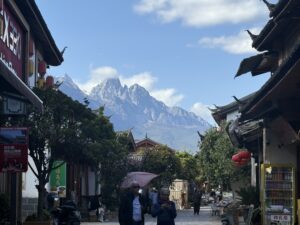
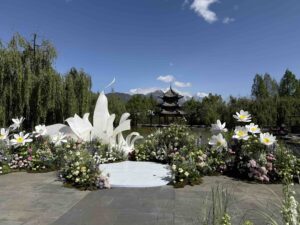
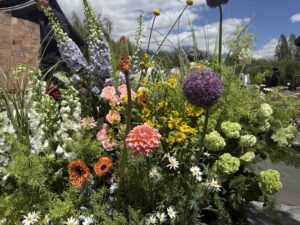
I found myself using the 48MP Fusion Main camera most of the time. Under daylight, it felt steady and reliable. The colours of the flowers, the layers in the background, and the overall balance between light and shadow never felt too heavy-handed. For travel, this kind of colour handling is practical. Many photos are meant to be shared right after they are taken, or later used directly in a vlog, without needing much extra adjustment.
Recording Without Interrupting the Moment
The wedding was the most important part of this trip to Yunnan. Unlike regular travel scenes, where I could take my time to frame a shot, many moments at a wedding happen suddenly. A friend’s smile, the applause in the room, or everyone turning to look in the same direction may last only a few seconds. What I appreciated about the iPhone 17 was that I did not have to pause the moment just to capture it. I could quickly take it out, shoot, and let the moment continue naturally.
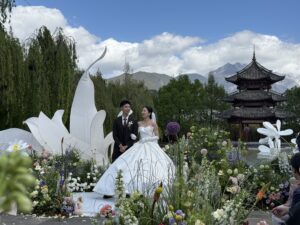
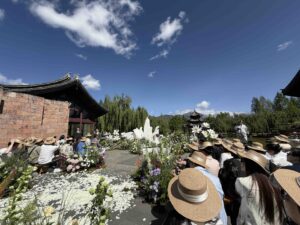
In this kind of setting, the combination of the 48MP Fusion Main and 48MP Fusion Ultra Wide becomes very useful. The main camera handles people and details, while the 0.5× ultra-wide lens brings more of the space into the frame. At a wedding, where the pace moves quickly and moments do not wait for perfect composition, a natural switch between lenses makes the whole recording process feel less disruptive.
Keeping Everyone in the Frame
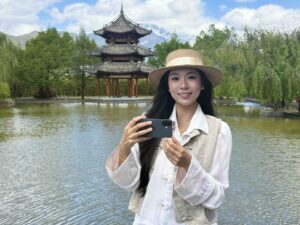
Group photos are almost unavoidable at a wedding. The iPhone 17’s 18MP Centre Stage front camera felt like a meaningful upgrade for travel and event settings. It is not just about a higher-resolution front camera; it also makes the framing of selfies more flexible.
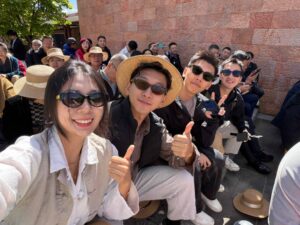
When taking selfies with friends, the frame can fit more people while still keeping the background of the venue in view. In the past, group selfies often meant everyone had to squeeze toward the centre, or the background would be cut off. This time, the process felt much easier. The photo was not just about capturing a few faces, but about keeping the feeling of everyone being together in that moment.
I also used Dual Capture quite often during the trip. It let me film the wedding scene with the rear camera while also recording my own reaction through the front camera. The feature supports simultaneous front and rear camera recording at up to 4K Dolby Vision at 30 fps. For content creators, it is more useful than just having another shooting mode. There is no need to set up a second camera or stitch two clips together in post-production.
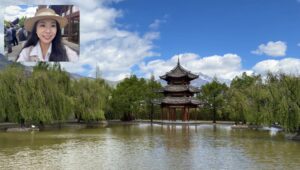
It keeps both what I am seeing and how I am reacting in the same video, which makes the footage feel more immersive and personal.
Bringing Movement into the Journey
Apart from the wedding and travel scenery, I also played tennis with friends in Yunnan. Under outdoor light, the iPhone 17’s 48MP Fusion Main camera was able to capture movement steadily, keeping moments like hitting the ball, running, and turning in a natural way.

For travel, that is useful. A journey is not made up only of landscapes and group photos. There are also spontaneous, everyday moments that happen along the way. The iPhone 17 was able to keep those dynamic scenes in the story, giving the final vlog a more varied rhythm.
Night Scenes That Keep Their Depth
Yunnan’s nights have a lot of texture. The lights in Lijiang Old Town are warm, with streets, lanterns, and crowds wrapped in a soft glow. The fireworks at the wedding felt completely different — brighter, shorter, and emotionally more intense.
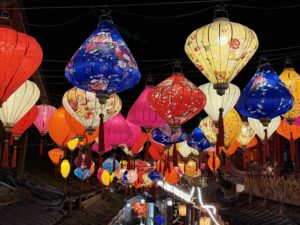
In these night scenes, the iPhone 17’s Night Mode preserved the relationship between light sources and darker areas. The lights kept their glow, while the night still kept its depth. The fireworks remained clear as they opened in the sky, and the surrounding environment was not made overly bright. The night scenes did not look like daytime with a filter on top. They still carried the atmosphere of the moment.
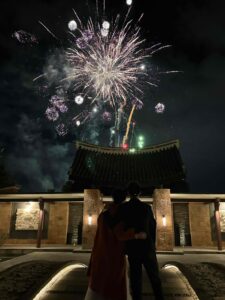
For travel and wedding memories, this kind of night processing feels more lasting. Many memories from the night are built from the balance between light and shadow, and the iPhone 17 kept that balance intact.
From Footage to Final Cut
In the end, I turned these photos and videos into a Yunnan vlog, documenting the journey from Singapore to Yunnan for my friend’s wedding. That process made me realise more clearly that the iPhone 17 is not just a shooting device. It is a tool that can take part in the whole process, from recording to creating.
The iPhone 17 supports 4K Dolby Vision video recording, and Dual Capture can also record up to 4K Dolby Vision at 30 fps. From the wedding scene to night shots and movement, the footage had enough room for editing.
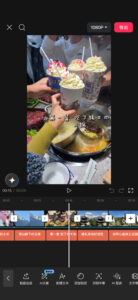
During the editing process, the A19 chip and the 6.3-inch Super Retina XDR display with ProMotion also made it easier to review, select, and preview clips. For me, it was not only about capturing the trip, but also about turning those moments into a finished piece.
What Remains Is More Than Photos
After using the iPhone 17 to document this trip to Yunnan, my impression of it became more specific. It is not a device that only feels impressive in one particular setting. Instead, it feels reliable in many ordinary, spontaneous, and very real moments.
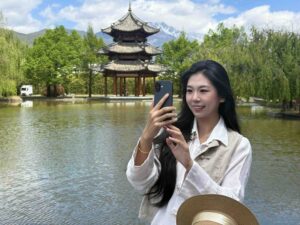
That may be what I appreciate most after spending more time with it. The iPhone 17 does not make recording feel complicated. It makes taking photos, reviewing footage, and creating content feel more natural. After the trip ended, what remained in my camera roll was not just a collection of beautiful images, but a memory I could open again.
The iPhone 17 retails from SGD 1,299 and is available now on the Apple Store.
iPhone 17 云南旅行体验:把瞬间留成故事
很多时候,我们按下快门,并不是为了得到一张完美的照片,而是为了留住以后还想再看一遍的瞬间。
使用 iPhone 17 一段时间后,这种感受变得更明显。它留下的不只是旅途中的风景,也包括朋友婚礼上的笑、大家挤进同一个镜头时的热闹,以及那些当下很快过去、却值得反复回看的记忆。
这次云南之行,从照片到视频,iPhone 17 更像是一台随身的创作工具,把一路上分散的片段,自然地串成了一段完整的故事。
云层之上的第一帧
这趟旅程的第一张记忆,是飞机窗外的雪山。隔着机窗拍远处的山,其实很考验手机对高光和细节的处理。但 iPhone 17 拍下来的画面,天空、云和山之间依然有清楚的层次。它没有把颜色处理得过分浓烈,而是保留了一种接近当时所见的自然感。
这也和 iPhone 17 这套 48MP Dual Fusion camera system 的成像风格很接近:它不是只追求第一眼的鲜艳,而是把光线、色彩和细节控制在一个比较舒服的平衡里。对旅行来说,这种稳定感比单纯“拍得亮”更重要。
把颜色留在刚刚好的位置
到了云南之后,画面里的颜色开始变得更丰富。鲜花、街道和自然光下的环境,都体现了 iPhone 17 对色彩的处理。它不会把颜色拉得过分鲜艳,而是让画面保持干净、舒服,也保留现场本来的氛围。
我比较常用的是 48MP Fusion Main camera。它在白天自然光下的表现很稳,花的颜色、背景的层次和整体明暗关系都不会显得太重手。对旅行来说,这种色彩处理很实用,因为很多照片都是拍完就会直接分享,或者放进后面的 vlog 里使用,不需要再花很多时间调整。
不打断当下的记录
婚礼是这次云南之行最重要的时刻,它不像普通旅行那样可以慢慢构图,很多瞬间都是突然发生的。朋友的笑、现场的掌声、大家看向同一个方向的时刻,往往只有几秒钟。iPhone 17 的好处,是让我不需要为了拍摄停下来太久,而是可以很快拿起来,把当下自然地留下来。
在这种场景里,48MP Fusion Main 和 48MP Fusion Ultra Wide 的组合会变得很实用。主摄负责人物和细节,0.5× 超广角则把更多空间关系放进画面里。婚礼现场的节奏很快,很多画面都不会等人慢慢构图,所以镜头之间的切换越自然,记录过程也越不容易打断当下。
让每个人都在画面里
婚礼上少不了和朋友合影。iPhone 17 这次的 18MP Center Stage front camera,是我觉得很适合旅行和活动场景的升级。它不只是前置像素变高,而是让自拍的构图更灵活。
和朋友一起自拍时,画面可以容纳更多人,也能把现场背景一起带进来。以前多人自拍经常会遇到大家努力往中间挤,或者背景被切掉的情况;这次拍起来会轻松很多。它记录的不只是几张脸,而是朋友们相聚在一起的状态。
这次我也很常用 Dual Capture。一边拍婚礼现场,一边把自己的反应放进画面里。这个功能支持前后摄像头同时录制,最高可到 4K Dolby Vision at 30 fps。对内容创作者来说,它比单纯多一个拍摄模式更实际,因为不需要额外架一台相机,也不用后期再拼接画面。它让“我看到的画面”和“我当下的状态”同时被留下来,视频也因此更有参与感。
把运动也放进旅程
除了婚礼和风景,这次在云南我还和朋友打了网球。iPhone 17 的 48MP Fusion Main camera 在户外光线下能稳定记录运动中的人物状态,击球、跑动和转身这些瞬间,都能被自然地留下来。
对旅行来说,这一点很实用。一趟旅程里不会只有风景和合照,也会有很多临时发生的生活片段。iPhone 17 能把这些动态瞬间一起记录下来,让后面剪成 vlog 时,画面节奏更丰富。
夜色没有被抹平
云南的夜晚很有层次。丽江古城的灯光是暖的,街巷、灯笼和人流都被包在柔和的光里;婚礼上的烟花则更明亮、更短暂,把夜空里的情绪一下子推到最高点。
iPhone 17 的 Night Mode 在这些夜间场景里,保留了光源和暗部之间的关系。灯光有亮度,夜色也有深度;烟花绽开的瞬间依然清楚,周围的环境也没有被处理得过分明亮。它拍下来的夜晚,不是被修饰成白天的夜晚,而是保留了当时现场的氛围。
对旅行和婚礼来说,这样的夜景处理会更耐看。因为很多夜晚的记忆,本来就来自那些光和暗之间的层次感。
从素材到成片
最后,这些照片和视频都被我整理成了一支云南 vlog,用来记录我从新加坡去云南参加朋友婚礼的过程。这个过程也让我更清楚地感受到,iPhone 17 不只是一个拍摄设备,而是从记录到创作都能参与其中的随身工具。
iPhone 17 支持 4K Dolby Vision video recording,双摄同拍也可以录制最高 4K Dolby Vision at 30 fps,所以从婚礼现场到夜景、运动画面,素材本身就有不错的后期空间。
剪辑时,A19 chip 和 6.3-inch Super Retina XDR display with ProMotion 也让回看、筛选和预览素材更顺手。对我来说,它不只是负责拍摄,也参与了从记录到成片的整个过程。
真正留下来的,不只是照片
用 iPhone 17 记录这趟云南之行之后,我对它的感受反而变得更具体了。它不是那种只在某一个场景里让人觉得惊艳的设备,而是在很多很普通、很临时、也很真实的时刻,都让我的使用感非常舒适。
这可能才是我使用一段时间后最喜欢 iPhone 17 的地方。它没有把记录这件事变复杂,而是让拍摄、回看和创作都变得更自然。旅行结束之后,留在相册里的不只是几张好看的照片,而是一段可以被重新打开的记忆。
iPhone 17 零售价为 1299 新加坡元起,现已在 Apple Store 发售。