


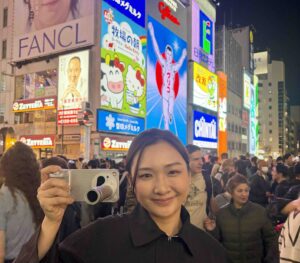
A trip to Osaka is always a good excuse to take plenty of photos. From its busy streets and colourful food stalls to scenic waterfront views, there is no shortage of things to capture. On this trip, I brought along the vivo X500 Pro Max and its optional 200mm ZEISS Telephoto Extender Gen 2 to see how far I could push smartphone photography.
The Glico Man, photographed before its renovation, made for a fun reminder of the trip, but it was the phone’s camera system that I was more interested in testing. I wanted to see whether it could handle different types of photography, from portraits and food shots to distant landscapes, while also giving me enough flexibility for video.
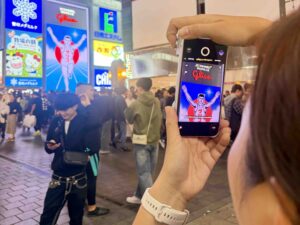
I usually prefer bringing a dedicated digital camera when travelling, but carrying a camera body and several lenses can take up quite a bit of space. With the vivo X500 Pro Max, I had a versatile camera setup in one device, although the additional telephoto extender did add some bulk.
A versatile camera system for different shooting situations
The vivo X500 Pro Max comes with a triple-camera setup comprising a 50MP main camera, a 50MP ultra-wide camera and a 200MP ZEISS APO telephoto camera. Each serves a different purpose, giving me the flexibility to switch between wider scenes, everyday shots and distant subjects without having to change lenses.
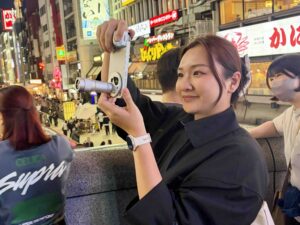
The 200MP telephoto camera is particularly interesting. It uses a 1/1.4-inch sensor with an f/2.67 aperture and an 85mm-equivalent focal length. When paired with the optional 200mm ZEISS Telephoto Extender Gen 2, it gives the phone considerably more reach for subjects that are further away.
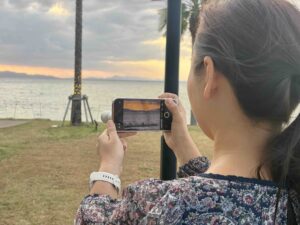
I found this useful when photographing details across the city or capturing landscapes from a distance. Instead of relying entirely on digital zoom, the extender gives me another option when I want to get closer to a subject without physically moving towards it.
There are also plenty of shooting modes to explore, including Landscape & Night, Portrait, Panorama, Food, Stage, Snapshot, Slow Motion, Time-lapse, Pro Photo and Pro Video. I did not need to use all of them during the trip, but having these options made it easier to adapt to different scenes.
Capturing Osaka’s landscapes and city scenes
For wider views, the ultra-wide camera came in handy when I wanted to fit more of the surroundings into a single frame. It was useful for capturing larger scenes where stepping further back was not always possible.
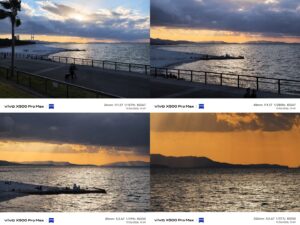
The main camera was my everyday choice for general photography, offering a good balance for street scenes and other subjects. When I wanted to pick out something further away, I switched to the telephoto camera.
This was where the 200mm extender became particularly useful. I enjoyed using it to photograph distant details and zoomed-in landscapes, including views of the ocean. It gave me a different perspective from the usual wide shots and made it easier to isolate parts of a scene.
Having the main, ultra-wide and telephoto cameras available also meant I could experiment with different compositions without constantly changing equipment. For travel photography, that flexibility is something I appreciated.
Food photography with a little extra colour
Osaka is known for its food, so naturally, I spent some time photographing what I ate along the way. The dedicated Food mode makes this easier, with settings designed for capturing meals and close-up details.
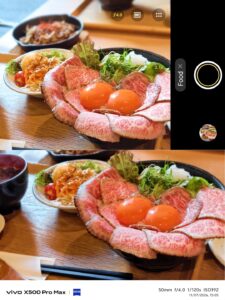
I liked being able to experiment with the different colour styles and filters rather than having every food photo look the same. Depending on the dish and lighting, I could go for a more natural look or give the image a little more colour.
Food photography is one of those everyday travel activities where a smartphone camera makes a lot of sense. It is quick to pull out, easy to frame and does not require carrying additional equipment just to capture a meal.
Portraits with a more natural background separation
Portrait photography was another area where I spent quite a bit of time experimenting. The 85mm-equivalent telephoto camera is well suited to portraits, giving subjects a more flattering perspective than shooting from very close with a wide-angle camera.
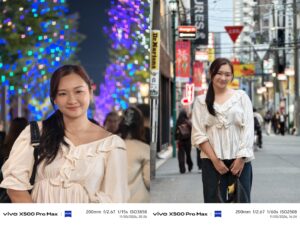
The phone also offers different portrait effects and background treatments, allowing me to adjust the look of the image. I could experiment with the amount of background separation and create photos that felt a little closer to what I would get from a dedicated portrait lens.
There are also Cinematic Portrait styles such as Film 200, Film 400 and Film 160. These provide different looks inspired by film photography, which can be useful when I want a particular mood without having to edit every photo afterwards.
I enjoyed trying out the different styles, especially when photographing people during the trip. It gave me more creative options while keeping the process simple.
Selfies and portraits from the front camera
The front camera is a 50MP unit with an f/2.0 aperture. It supports Portrait, Photo, Video and Portrait Video modes, along with beauty adjustments and background effects.
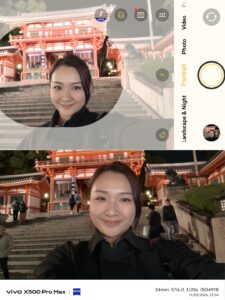
I do not usually spend too much time tweaking selfies, but it is useful to have the option to adjust the appearance of a portrait or add a little background separation. The different modes also make the front camera more versatile when taking photos or recording short videos.
More creative options for video
Photography was my main focus during the trip, but I also spent time exploring the phone’s video capabilities. The vivo X500 Pro Max supports 4K recording, including 4K at 60fps, as well as 4K 240fps slow-motion video.
There are several video styles to experiment with. The 4K Cinematic Colour Video mode includes Sunny Day, Paris Afterglow, Vibrant, Pastel and Modern Film. These offer different colour treatments, making it easier to give footage a particular look straight from the phone.
For portrait videos, the 4K Cinematic Portrait Video mode includes Golden Hour, Platinum, Sunny Day and Modern Film. I like having these options because they provide more creative control without needing to spend time grading every clip.
For those who prefer more control over the final look, Cinematic Pro Log Video offers additional flexibility for colour grading during editing. There is also 4K 240fps slow motion for capturing fast-moving subjects, as well as Auto Framing Video, Vortex Shot and 4K Dual-View Video.
The phone also has a quad-microphone system with directional audio and audio zoom. These features are useful when recording video in busier environments, where background noise can make it harder to capture the sounds I actually want.
I enjoyed trying the different video styles during the trip. They gave me more ways to capture the same surroundings, whether I wanted a straightforward travel clip or something with a more cinematic feel.
Battery life that kept up with the trip
A phone can have all the camera features in the world, but none of them is particularly useful if the battery runs out halfway through the day. Fortunately, battery life was one of the areas where the vivo X500 Pro Max performed well during my time in Osaka.
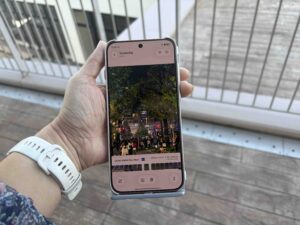
The phone comes with a 7,800mAh BlueVolt battery. With my usual travel activities, including taking photos, recording videos, checking directions and keeping in touch, I did not find myself needing to charge it very often.
That was particularly helpful on days when I was out exploring for extended periods. I could take photos and videos throughout the day without constantly worrying about finding a power outlet.
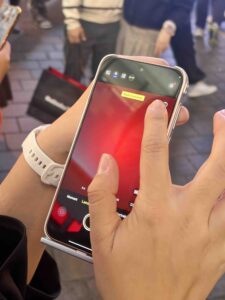
I also did not notice the phone getting uncomfortably hot during my use. vivo says the device features a liquid-cooling vapour chamber that is 32% larger, designed to help manage heat. While I cannot speak for every possible workload, I did not encounter any noticeable overheating during my photography and video sessions in Osaka.
The trade-off: carrying the phone and telephoto extender
There is one practical consideration when using the vivo X500 Pro Max with its optional 200mm ZEISS Telephoto Extender Gen 2: the size and weight.
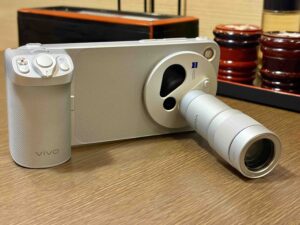
The phone weighs around 229g, while the extender adds another 153g. Together, that makes for a noticeably bulkier setup than carrying the phone on its own. It is not something I would casually slip into a pocket when I want to travel light.
However, I would look at the setup differently if I were using it as an alternative to a dedicated camera. Bringing a digital camera usually means packing the camera body, lenses and accessories. The vivo setup takes up space too, but it could still be a more compact option than carrying a separate camera system with multiple lenses.
For someone who enjoys taking photos while travelling but does not necessarily want to bring a full camera kit, that is an interesting proposition.
A capable travel camera that gives you room to experiment
After spending time with the vivo X500 Pro Max in Osaka, I came away impressed by how versatile its camera system is.
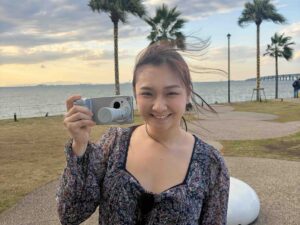
The combination of main, ultra-wide and telephoto cameras gives me plenty of flexibility, while the optional 200mm ZEISS Telephoto Extender Gen 2 opens up more possibilities for distant subjects and zoomed-in landscape photography.
For my Osaka trip, the vivo X500 Pro Max proved to be more than just a convenient smartphone camera. It gave me a versatile way to capture the places, food and moments along the way, without needing to bring my usual camera gear.
The vivo X500 Pro Max currently retails for $2,499, and with the inclusion of the lens kit, it will cost $3,099.