



At Google I/O 2026, Google laid out its vision for what CEO Sundar Pichai called the “agentic Gemini era,” a future where AI agents move beyond simple chatbots to become proactive digital assistants capable of reasoning, acting and completing tasks on behalf of users.
During his keynote, Sundar Pichai described the past year as a period of “hyper progress” in artificial intelligence, with Google now focused on delivering practical everyday value through AI-powered products used by billions of people.
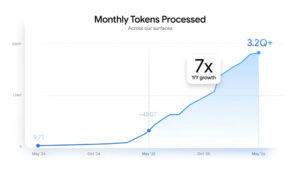
Google revealed that its systems are now processing over 3.2 quadrillion tokens per month across its products and platforms, representing a sevenfold increase year-over-year. The company also announced that more than 8.5 million developers are now building with Gemini models monthly, while its APIs process around 19 billion tokens every minute.
Gemini Continues Expanding Across Google Products
Google says Gemini models are now deeply integrated into many of its most widely used services. According to the company, AI Overviews now reaches over 2.5 billion monthly active users, while AI Mode has already surpassed one billion monthly active users within a year.
Pichai said Search is evolving from a system built around individual queries into something that feels more conversational and context-aware, allowing users to explore topics more deeply across the web.
The Gemini app has also grown significantly, expanding from 400 million monthly active users last year to more than 900 million today. Google says daily requests inside the app have increased more than sevenfold during the same period.
The company additionally revealed that over 50 billion AI-generated images have already been created using its Nano Banana image generation models.
Conversational AI Expands to YouTube, Docs and More
One major focus at I/O 2026 was making AI interactions feel more natural and conversational across Google’s ecosystem.
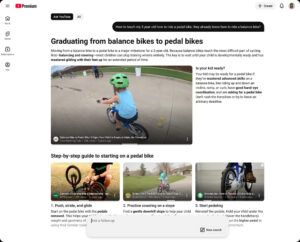
Google introduced Ask YouTube, a new AI feature that helps users find relevant information within videos more easily. Instead of manually searching through long videos, Ask YouTube can identify the most relevant sections based on conversational questions and jump directly to those moments.
Google also announced Docs Live, which allows users to create and organise documents using natural spoken conversation rather than typing prompts manually. Users can verbally “brain dump” ideas while Gemini structures the content automatically.
According to Google, these voice-powered AI features will later expand into Gmail and Keep as well.
Gemini 3.5 Flash Pushes Faster Agentic AI
Google also introduced Gemini 3.5 Flash, its latest AI model designed to combine high intelligence with extremely fast response speeds.
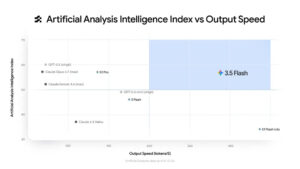
According to Google, Gemini 3.5 Flash performs better than Gemini 3.1 Pro across most benchmarks while delivering output speeds up to four times faster than competing frontier AI models.
The company says the model is especially focused on:
● Agentic coding
● Long-horizon reasoning
● Real-world workflows
● Multimodal tasks
Google also emphasised the cost efficiency of the new model, claiming companies could potentially save billions of dollars annually by shifting workloads toward Gemini 3.5 Flash.
The model is now available across Google products and APIs, while Gemini 3.5 Pro is expected to launch next month.
Gemini Spark Becomes a 24/7 AI Agent
Perhaps the biggest announcement at the event was Gemini Spark, which Google describes as a persistent AI agent designed to actively manage and assist with users’ digital lives.
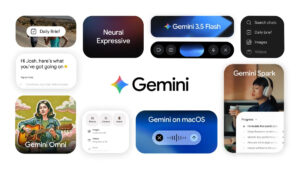
Unlike traditional assistants that wait for commands, Gemini Spark operates continuously in the background using dedicated Google Cloud virtual machines. It can perform longer-running tasks autonomously while integrating with Google services and third-party tools.
Google says users will eventually interact with Spark through:
● The Gemini app
● Email
● Chat
● Chrome browser
● Android’s upcoming Halo interface
Spark is initially rolling out to trusted testers before expanding to Google AI Ultra subscribers in the United States.
Search Becomes More Agentic and Personalised
Google also previewed a future where Search behaves more like an intelligent assistant rather than simply a search engine.
The company introduced “information agents” for Search, allowing users to create persistent AI agents that monitor topics, track information and proactively surface updates when relevant.

Search will additionally gain agentic coding capabilities powered by Gemini 3.5 Flash and Google’s new Antigravity system. These capabilities will allow Search to dynamically generate custom layouts, dashboards and interactive experiences tailored to individual tasks.
Google describes these future search experiences as “mini apps” built dynamically for users directly within Search itself.
New AI Tools for Creativity, Science and Wearables
Beyond productivity and agents, Google also announced several new AI-powered creative and scientific tools.
Google Flow is receiving new AI agents capable of helping users brainstorm, edit and even generate creative tools through conversational instructions.

Google also introduced Google Pics, a new image generation and editing system built on its Nano Banana model that treats image elements as editable objects rather than static pictures.
The company additionally shared more details about its upcoming intelligent eyewear powered by Gemini. The glasses will provide spoken assistance, messaging, directions and contextual information while remaining hands-free.
Google confirmed that audio glasses will launch first later this fall.
Meanwhile, Gemini for Science aims to accelerate scientific discovery by connecting Gemini’s reasoning capabilities with more than 30 major life science databases and research tools.
Building the Infrastructure for the AI Era
To support its growing AI ambitions, Google revealed that it expects capital expenditures to reach approximately US$180 billion to US$190 billion this year, nearly six times higher than its 2022 spending levels.

Google says its latest infrastructure can now scale training across more than one million TPUs globally while improving energy efficiency and reducing latency.
According to Sundar Pichai, the rapid progress across Gemini, infrastructure, Search and AI agents signals that Google has fully entered what it calls the “agentic Gemini era,” where AI systems become radically more proactive, helpful and integrated into everyday digital life