

Formula 1 has always been about speed, precision and pressure. But behind the lights, noise and race-day spectacle is one of the world’s most demanding live technology environments.
At every race, Formula 1 assembles a trackside Event Technical Centre that brings together timing, telemetry, team radio, camera feeds and critical race data. Much of that then connects back to Formula 1’s Media & Technology Centre in the UK, the nerve centre of its broadcast and data operations. Lenovo’s role sits inside this invisible layer, supporting the servers, computing infrastructure, AI-ready laptops, monitors, workstations, tablets and Motorola smartphones used by Formula 1 personnel.
That is what makes the partnership meaningful. It is not just about branding around the circuit. It is about showing how technology helps a global sporting event run, scale and reach fans in real time.
The pressure is immense. Every second, more than 300 sensors on each F1 car can contribute around 1.1 million data points. Lenovo and Formula 1 have moved the processing and deduplication of around 8TB of telemetry per race weekend closer to the circuit, reducing latency in delivering information to teams by up to 0.3 seconds at the most geographically distant races. In Formula 1, those fractions matter.
For businesses, the lesson is clear: technology has to be designed for the difficult day, not just the average one. Whether it is race telemetry, workplace devices or warehouse systems, performance comes from having an environment that is reliable, manageable and able to adapt under pressure.
That thinking applies in Singapore too. Lenovo TruScale Device as a Service helped Aspial modernise workplace technology across its diversified businesses, replacing ageing hardware with 500 ThinkPad business laptops and delivering up to 80 per cent faster application performance for end users.
With ST Logistics, Lenovo helped connect warehouse management and robot-control systems through an integrated Warehouse Execution System, increasing order processing by up to 40per centt, productivity by up to 30 per cent and reducing energy consumption by 30 per cent.
Sustainability is also part of the F1 story. Lenovo Neptune Liquid Cooling now supports Formula 1’s high-performance computing and AI environment, removing heat at the processor level and increasing energy efficiency by up to 40 per cent. For Singapore, where data-centre cooling is a major consideration, that matters.
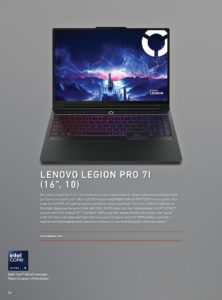
The partnership also reaches younger fans through Lenovo Legion’s role in the 2026 F1 Sim Racing World Championship. Sim racing turns fans into participants, giving them a deeper appreciation of braking points, strategy, consistency and racecraft.
Ultimately, the most powerful technology is the kind fans stop noticing.
The race should arrive faster, feel clearer and become easier to understand. That is the real opportunity: using sport as a proving ground for technology that delivers value long after race weekend ends.
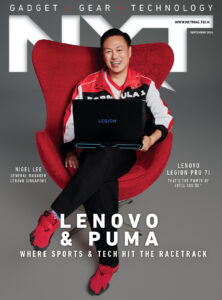
Nigel Lee
General Manager, Lenovo Singapore
The Lenovo Sports Story Is About Turning Live Data Into Faster Decisions And Better Experiences
The “AI at the speed of sport” idea is simple: sport never stops, so the technology behind it cannot afford to either.
In other words, AI is not being positioned here as a novelty. It is becoming part of the event architecture.
Formula One Proves Why Infrastructure Matters
The same real-time logic applies to Formula 1®, where every millisecond matters.

F1 teams process enormous volumes of telemetry and race data, and those insights can shape decisions in the moment. Lenovo’s AI-optimised servers and storage solutions provide infrastructure designed to support the sport’s future, from track operations to broadcast and digital products.
Lenovo ThinkSystem SD665-N V3 servers with Lenovo Neptune® Liquid Cooling support race operations and help put data into the hands of the FIA, teams, broadcasters and fans.
The goal is to reduce the time between ideation and execution, allowing faster experimentation, quicker learning and the ability to iterate rapidly.
That is a very Formula 1 way to think about technology. Speed is not just what happens on track. It is also how quickly teams, organisers and broadcasters can understand what is happening and act on it.
The New Baseline of Live Sport
What links all three stories is the same bigger idea: major sport now depends on intelligence that can operate at live speed.
This is where sports tech is heading. Not just more screens, more dashboards or more data for the sake of it, but smarter systems that help people move faster, see more clearly and make better decisions while the event is still unfolding.
And when it works, it should feel seamless. Fans get closer to the action. Operators get a clearer view of the event. Broadcasters get richer storytelling tools. Teams get data where they need it.
That is the real promise of AI at the speed of sport: not technology taking the spotlight, but technology making the biggest live moments sharper, smoother and more unforgettable.
The Lenovo, adidas, and Puma F1 special full supplement in the NXT September 2026 issue is available now for download at magzter.com.