


Sport has always moved quickly. The difference now is that the technology behind it has to move just as fast.
From FIFA World Cup 26™ operations to AI-stabilised referee-view footage and Formula 1® race-day infrastructure, Lenovo is positioning itself at the centre of a new sporting reality: one where live events are powered by real-time data, smarter infrastructure and AI systems designed to turn information into action almost instantly.

It is a big shift, because modern sport is no longer just about what happens on the field, pitch or track. Behind every major event sits a massive operational machine. Logistics, broadcast production, fan movement, venue coordination, data analysis and decision-making all have to happen at speed.
The challenge is not just collecting that information. It is making it useful while the moment is still alive. That is the space Lenovo is stepping into.
The World Cup On An Unprecedented Scale
FIFA World Cup 26™ is set to operate at a scale the tournament has never seen before. With 48 teams, 104 matches, 16 host cities and three countries, the logistics alone are enormous. Lenovo’s role is to help FIFA manage that complexity with AI, advanced infrastructure and real-time operational tools.
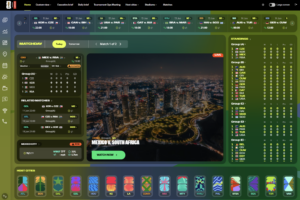
At the heart of that effort is Lenovo’s Intelligent Command Centre, a centralised platform designed to give FIFA a live operational picture of the tournament.
That matters when an event spans three countries and 16 stadiums. Different functional teams need to update one another in real time, recurring issues need to be identified quickly, and potential disruptions have to be spotted before they become bigger problems. Lenovo’s role is to design and build the platform, integrating data, dashboards and decision-support tools so FIFA’s teams can coordinate more clearly when it counts.
It is not the flashiest kind of tech, but that is exactly why it matters. The best operational technology is often invisible to fans. They only feel the result: a smoother tournament, faster responses and fewer cracks in the live-event experience.
Referee’s View Changes The Fans’ Perspective
While the Intelligent Command Centre sits behind the scenes, Referee View is Lenovo’s most visible showcase of AI in the tournament experience.
During the opening match of the FIFA World Cup 2026, Mexico’s Julian Quinones scored the first goal of the tournament against South Africa at Mexico City Stadium. That moment was captured by Referee View, powered by Lenovo AI, giving fans the point of view of referee Wilton Sampaio.

The idea is instantly compelling: instead of only watching the match from traditional broadcast cameras, fans get an on-field perspective that brings them closer to the speed and pressure of the game. You see the play from inside the action, not just from above it.
The technical challenge is making that perspective watchable. A referee is constantly moving, turning and reacting, which can make raw point-of-view footage unstable. Lenovo’s AI-driven stabilisation feed overlay is designed to reduce jitter by up to 50% in high-motion scenarios, giving broadcasters an additional stream that feels immersive without becoming distracting.
That is the smart part. Referee View does not replace the classic broadcast angle. It adds a new layer to it. For fans used to action cameras, gaming-style perspectives and social-first sports clips, it makes football feel more immediate and more visceral.
AI At Speed Of Sport
The broader Lenovo sports story is about turning live data into faster decisions and better experiences. The “AI at the speed of sport” idea is simple: sport never stops, so the technology behind it cannot afford to either.
For FIFA World Cup 26™, Lenovo’s AI and infrastructure work includes AI-guided navigation for stadium visitors, the FIFA AI Pro assistant experience, the Intelligent Command Centre for tournament logistics, AI-stabilised referee point-of-view footage, realistic 3D player avatars for live replays and advanced broadcast centre infrastructure built for global content delivery.
Taken together, these are not isolated features. They are pieces of a larger live-event system. Navigation helps fans move more easily. The command centre helps tournament teams coordinate operations. Referee View brings audiences closer to the action. 3D player avatars support more immersive replays. Broadcast infrastructure helps support the demands of delivering a global tournament to billions of viewers.
In other words, AI is not being positioned here as a novelty. It is becoming part of the event architecture.
Formula One Proves Why Infrastructure Matters
The same real-time logic applies to Formula 1®, where every millisecond matters.
F1 teams process enormous volumes of telemetry and race data, and those insights can shape decisions in the moment. Lenovo’s AI-optimised servers and storage solutions provide infrastructure designed to support the sport’s future, from track operations to broadcast and digital products.
Lenovo ThinkSystem SD665-N V3 servers with Lenovo Neptune® Liquid Cooling support race operations and help put data into the hands of the FIA, teams, broadcasters and fans. The goal is to reduce the time between ideation and execution, allowing faster experimentation, quicker learning and the ability to iterate rapidly.
That is a very Formula 1 way to think about technology. Speed is not just what happens on track. It is also how quickly teams, organisers and broadcasters can understand what is happening and act on it.
The New Baseline of Live Sport
What links all three stories is the same bigger idea: major sport now depends on intelligence that can operate at live speed.
For FIFA, that means building a command layer capable of managing the most complex World Cup in history. For fans, it means broadcast tools like Referee View that make the match feel closer and more immersive. For Formula 1, it means infrastructure that can support data-heavy racing environments where decisions happen in milliseconds.
This is where sports tech is heading. Not just more screens, more dashboards or more data for the sake of it, but smarter systems that help people move faster, see more clearly and make better decisions while the event is still unfolding.
And when it works, it should feel seamless. Fans get closer to the action. Operators get a clearer view of the event. Broadcasters get richer storytelling tools. Teams get data where they need it.
That is the real promise of AI at the speed of sport: not technology taking the spotlight, but technology making the biggest live moments sharper, smoother and more unforgettable.
To learn more about Lenovo, click here.