

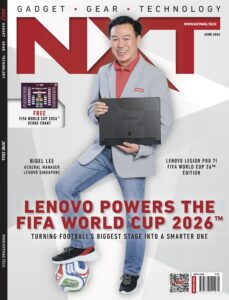
When people talk about the FIFA World Cup, the spotlight naturally lands on the football. The goals. The stars. The controversy. The atmosphere. What rarely gets the same attention is the invisible machine behind it all — the infrastructure that keeps a tournament of this scale moving across venues, countries, broadcasts, operations, and billions of viewers. That is exactly where Lenovo now comes in.

As FIFA’s Official Technology Partner for the FIFA World Cup 2026TM, Lenovo is not just attaching its name to the spectacle. It is helping build the digital backbone that will support it. In our interview, Nigel Lee, Lenovo’s Country General Manager, described the company’s role in plain terms: devices, infrastructure, and AI-enabled solutions that support tournament logistics, operational decision-making, and the fan experience itself.
That matters more than it may first seem. World Cup 2026 will be bigger than anything the tournament has attempted before — more teams, more matches, three host countries, and a level of complexity that Nigel repeatedly boils down to one word: scale. Behind the football sits something closer to a temporary smart city, where millions of spectators, thousands of staff, and countless live data points have to work in sync. Lenovo’s answer to that challenge includes an AI-driven Intelligent Command Centre, built to pull together data from across the event and turn it into real-time insight for organisers.

Alongside that sits another idea that sounds futuristic but is quickly becoming very real: digital twins. Lenovo and FIFA are using virtual models of stadiums and surrounding infrastructure to simulate scenarios before they happen, from crowd movement to security issues to match-day operations. The point is not flashy tech for its own sake. It is preparation, visibility, and faster decision-making when the margins are tight.
For fans in Singapore, all this may sound distant at first. We are not hosting matches. We are not managing stadium gates in North America. But Nigel’s point is that smoother operations behind the scenes ripple outward into a better global viewing experience. If tournament systems run more cleanly, broadcasts become richer, logistics become less disruptive, and storytelling becomes more immersive for viewers everywhere — including the ones watching on the MRT, from shared living rooms, or through a laptop during a late-night kickoff.

That broadcast side is where Lenovo’s role becomes much more tangible. One of the clearest examples is Referee View, which combines body-cam perspective with Lenovo-backed AI stabilisation. Nigel describes it as serving two goals at once. First, it can support officiating by offering additional visual context during key moments. Second, it gives audiences a more intimate perspective on the match by placing them closer to the decision-making pressure officials face in real time. In short, it is both a transparency tool and a storytelling tool.

The same thinking applies to digital avatars for offside replays. Nigel is careful to stress that clarity has to come first. The point of 3D player visualisations is not to overcomplicate football for casual viewers, but to explain critical moments more intuitively and more convincingly. If a fan cannot grasp the replay quickly, the technology has failed. That is a useful litmus test — one that suggests Lenovo understands that better tech only matters if it makes the game easier to follow, not harder.
Then there is Football AI Pro, Lenovo’s tool for rapidly analysing massive match datasets. Nigel sees it as something that can help coaches and analysts surface insights faster, cutting down on manual review and allowing decision-makers to focus on tactics and preparation. But he also sees long-term potential on the consumer side. Used well, this kind of intelligence could deepen fan understanding by making tactical shifts, player dynamics, and turning points easier to appreciate without drowning audiences in statistics.

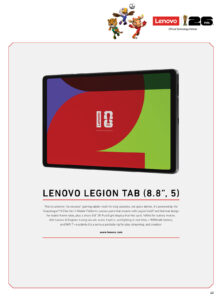
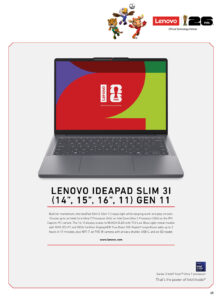
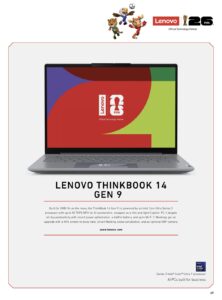
That idea of premium experiences beyond the living-room sofa also runs through Lenovo’s Singapore strategy. Nigel points out that local viewing habits are highly mobile and digitally connected, which is why Lenovo is thinking in ecosystems rather than single screens. That philosophy is reflected in its FIFA World Cup 2026TM Special Edition devices, including the Yoga Slim 7i Aura Edition, Legion Pro 7i, ThinkPad FIFA Edition, and Motorola’s razr FIFA Edition. For Nigel, these products are not just about performance. They are about recognising that devices today carry cultural meaning too. They can be tools, but they can also express fandom, identity, and participation in a global moment.
Underpinning all of this is one final concern: trust. As Nigel puts it, “smarter” cannot be allowed to drift into “creepy.” Lenovo’s guardrails include hybrid AI architectures, device-level intelligence, and built-in privacy and security considerations from the outset. It is the kind of answer you would expect in 2026, but also the right one. Because if technology is going to shape how billions experience the biggest football tournament on earth, it needs to feel not just powerful, but dependable.
That may end up being Lenovo’s biggest contribution of all. Not just making the World Cup smarter, but making all that intelligence feel seamless enough that fans barely notice it — except in how much better the tournament feels.
To learn more about Lenovo products, click here.
NXT is available at all major newsstands, bookstores, and the digital version is available to download at magzter.com