


Social Horror, Sharpened
A first-person nightmare that weaponises your phone—and your choices
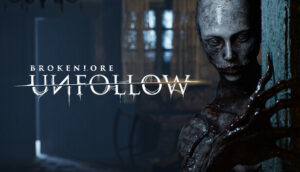
I went in expecting “another indie horror corridor,” but UNFOLLOW has a sharper, more modern hook: it treats your phone as both comfort object and threat amplifier, then drags you through a surreal psychological spiral built around social pressure, harassment, and the way online spaces can warp self-worth. It’s not subtle—and that’s kind of the point. The game frames Anne’s story through symbolism and unsettling shifts in reality rather than long speeches, which makes the themes land harder because you’re feeling them instead of being told about them.

Moment to moment, UNFOLLOW works best when it’s letting you explore and marinate in its atmosphere. You’ll spend a lot of time scanning environments for clues, piecing together what’s real and what’s performative, and doing that classic horror calculus: “Do I check the dark corner for supplies, or do I keep moving because the sound design is screaming NO?” The audio is doing serious work here—footsteps, distant knocks, the low-frequency dread that makes you second-guess empty hallways. When it’s on, it’s properly on: the kind of tension that makes you walk slower even though you know you shouldn’t.

The pacing is also more deliberate than a lot of short-form horror. It knows when to let silence stretch, and it knows when to spike your heart rate—though it doesn’t always rely on cheap jump scares to do it. Instead, it uses weirdness: spaces that don’t behave, objects that feel loaded, and repeated motifs that start to feel like they’re watching you back. That’s the strongest version of UNFOLLOW: dread that grows because the world feels wrong, not because something popped out.

Mechanically, the game’s most confident lane is exploration + puzzle progression. When it asks you to “notice” things—patterns, repeated imagery, small environmental cues—it feels smart and cohesive. It wobbles slightly when pressure sequences kick in, and the game leans harder into “do this quickly or fail.” Those moments aren’t dealbreakers, but they can feel a touch less elegant than the slow-burn sections, like the game briefly swaps psychological tension for more traditional horror-gaming friction. It’s also where a few rough edges show—movement timing, readability in high-stress moments, the occasional “I know what you want, but the game isn’t giving it to me cleanly.”

What kept me locked in was the way it plays with consequence. UNFOLLOW is built around multiple endings, and the game makes it clear your decisions aren’t just cosmetic—they shape how the story resolves and what kind of “truth” you’re left with. That gives the whole experience a nice aftertaste: when you finish, you’re not only thinking about what happened, you’re thinking about what you did.
If you want a polished, big-budget horror rollercoaster, this isn’t that. But if you want a modern psychological horror piece with strong atmosphere, a genuinely relevant theme, and enough choice-driven replay value to justify a second run, UNFOLLOW is a grim little surprise—uneven in spots, but memorable where it counts.
We say: Smart, uncomfortable horror with great atmosphere—just a bit uneven.
Rating: 4/5
Platforms:
PC (Steam), PlayStation 5, Xbox Series X|S
www.serafiniproductions.com