


Apple has introduced a major wave of new accessibility features powered by Apple Intelligence, bringing more natural interactions, enhanced visual assistance and expanded accessibility support across its ecosystem. The updates, which are arriving later this year, span across iPhone, iPad, Mac, Apple TV and Apple Vision Pro.
Apple says the new features are designed to help users with visual, hearing, mobility and learning disabilities navigate devices more intuitively while ensuring that processing remains private through on-device intelligence.
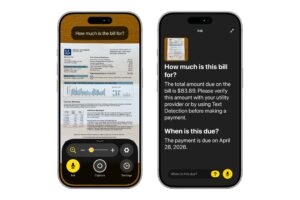
One of the biggest improvements comes to VoiceOver and Magnifier. With Apple Intelligence, VoiceOver can now provide much more detailed descriptions of visual content across the system, including photographs, scanned bills, documents and personal records. Users can also use the Action button on iPhone to ask questions about objects or scenes visible through the camera viewfinder and receive detailed spoken responses. Apple says users can continue the interaction conversationally with follow-up questions to obtain even more visual information.
Magnifier is also gaining these AI-powered visual exploration features within a high-contrast interface designed for users with low vision. Users will be able to ask questions about their surroundings and even control the app using spoken commands such as “zoom in” or “turn on flashlight.”
Apple is also making Voice Control significantly more natural and flexible. Instead of memorising exact labels or button names, users can now navigate apps using conversational language.
Apple calls this feature “say what you see,” allowing commands such as “tap the purple folder” or “tap the guide about best restaurants.” This is especially useful for visually complex apps like Maps and Files, while also helping users navigate apps where interface elements may not be properly labelled for accessibility.
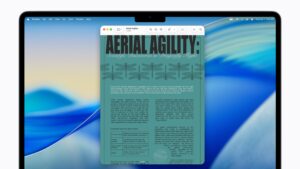
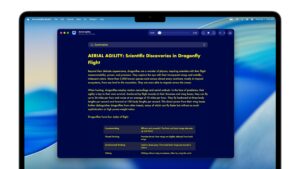
Another major update is coming to Accessibility Reader. Originally designed for users with dyslexia or low vision, the feature can now better handle more complex reading materials such as scientific articles with multiple columns, images and tables. Apple Intelligence also introduces on-demand article summaries, allowing readers to get a quick overview before diving into the full content. Built-in translation will further allow users to read content in their preferred language while preserving custom fonts, colours and formatting.
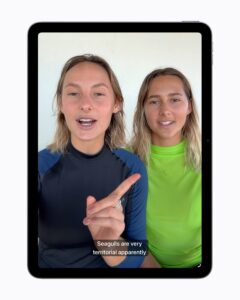
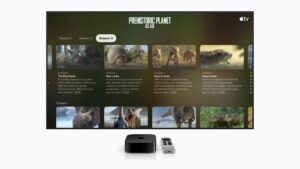
For users who are deaf or hard of hearing, Apple is introducing generated subtitles across its ecosystem. Using on-device speech recognition, Apple devices can automatically create captions for videos that do not already include subtitles. This includes personal videos recorded on iPhone, clips shared by friends and family, and online-streamed content. The feature will work across iPhone, iPad, Mac, Apple TV and Apple Vision Pro, with users able to customise subtitle appearance directly in settings.
Apple also announced a groundbreaking accessibility feature for Apple Vision Pro users who rely on alternative wheelchair drive systems. Leveraging Vision Pro’s precision eye-tracking technology, users will be able to control compatible power wheelchairs using only their eyes. The feature will initially launch in the United States with support for Tolt and LUCI alternative drive systems, supporting both Bluetooth and wired connections.
Pat Dolan, who has lived with ALS for 10 years, described independent wheelchair control as “gold,” praising Apple for creating life-enhancing technology for people who need it most. Apple says the eye-tracking system works across different lighting conditions without requiring frequent recalibration.
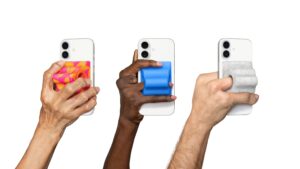

Alongside the software updates, Apple also announced the worldwide launch of the Hikawa Grip & Stand for iPhone through the Apple Store online. Designed by Los Angeles-based designer Bailey Hikawa in collaboration with disability communities, the adaptive MagSafe accessory is designed to help users with grip, strength and mobility limitations hold their iPhone more comfortably. The product is now available globally in three new colours.
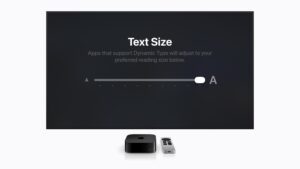

Apple also previewed several additional accessibility updates arriving later this year. These include Vehicle Motion Cues for visionOS to help reduce motion sickness in moving vehicles, face gesture controls for Apple Vision Pro, improved hearing aid pairing and device handoff, Larger Text support for Apple TV, Name Recognition support across more than 50 languages, and new FaceTime APIs for sign language interpretation apps. Apple also confirmed support for the Sony Access Controller across iPhone, iPad and Mac, allowing users to create highly personalised gaming control setups.
The latest accessibility updates reflect the company’s broader commitment to building technology that is more inclusive, intuitive and adaptive for users with different needs, while continuing to integrate Apple Intelligence in a privacy-focused way across its ecosystem.
Apple Intelligence is available in beta with support for these languages: English, Danish, Dutch, French, German, Italian, Norwegian, Portuguese, Spanish, Swedish, Turkish, Vietnamese, Chinese (simplified), Chinese (traditional), Japanese, and Korean. Some features may not be available in all regions or languages. For feature and language availability and system requirements, see support.apple.com/en-sg/121115.
VoiceOver and Magnifier should not be relied upon in circumstances where one could be harmed or injured, in high-risk situations, for navigation, or for the diagnosis or treatment of any medical condition.
Voice Control powered by Apple Intelligence will be available in English in the U.S., Canada, the UK, and Australia.
Generated subtitles will be available in English in the U.S. and Canada.
The feature and Apple Vision Pro are intended for use in controlled environments. For more information, visit support.apple.com/en-sg/118507.
A wired connection requires the purchase of the Apple Vision Pro Developer Strap.
Customers can purchase the Hikawa Grip & Stand for iPhone on apple.com/sg in Australia, Austria, Belgium, Canada, China, Denmark, France, Hong Kong, Italy, Japan, the Netherlands, Singapore, South Korea, Spain, Sweden, Switzerland, Taiwan, the United Arab Emirates, the UK, and the U.S.