


This was my second time in Japan, but it felt like a different kind of trip straight away. The first time, I wanted to see as much of the country as possible. This time, I stayed in Tokyo only, and that ended up being the right call. Tokyo is so layered, so dense with detail, that narrowing the trip down actually made it richer.
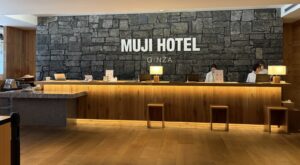
I based myself at MUJI HOTEL GINZA, which sits right in the middle of Ginza at 3-3-5 Ginza and feels exactly like the district around it: calm, deliberate and design-conscious. MUJI describes it as a “home base” for taking in Ginza more deeply, and that really is what it became for me. The hotel has 79 rooms, uses materials like wood, stone and repurposed paving stones in its interior, and leans into that restrained, thoughtful MUJI mood without becoming cold.

What surprised me most was how quickly Tokyo stopped feeling intimidating. Before the trip, I had quietly built up this idea that navigating the city would be stressful because of the language barrier. In reality, the iPhone Air flattened that anxiety almost immediately. Between Google Maps, translation features, screenshots, and the general confidence that comes from always having a fast, bright, reliable phone in hand, the city became much easier to read than I expected.
Apple’s own pitch for the iPhone Air is that it pairs a breakthrough thin-and-light design with all-day battery life, an eSIM-first travel experience, and on-the-go Apple Intelligence features like Live Translation. In practice, those things mattered. The phone never felt like one more gadget to manage. It felt like a travel companion that removed friction.
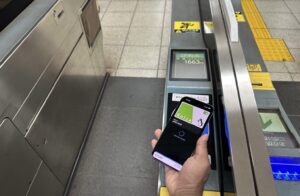
The train system was where that friction reduction really clicked. I travelled around Tokyo by train only, and using a digital Suica card on the iPhone Air made the whole thing absurdly smooth. JR East describes Suica as an IC card that can be used on trains, buses and even for shopping, and that “single tap” idea is exactly why it works so well in Tokyo.
Instead of stopping to buy tickets or fumbling around at machines, I could just tap through the gates and keep moving. That sounds minor until you do it all day, hopping between neighbourhoods, changing lines, stopping for coffee, then heading off again. The convenience compounds. In a city that moves at Tokyo’s pace, being able to travel at that feels less like a perk and more like a rhythm.
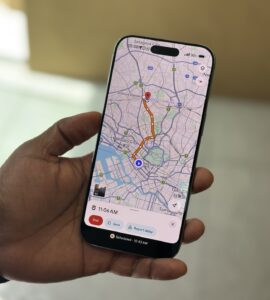
Because I was moving so easily, I found myself wandering more, and that led to some of my favourite parts of the trip. I used Google Maps not just for the obvious places, but for all the weird little side quests too: smaller cafés, backstreet shops, quiet corners, tiny destinations that would never make a first-timer’s greatest-hits list.
That mattered. Tokyo is incredible at street level. You can turn one corner and get a wall of polished glass and steel, then turn another and find an older building with just enough texture and asymmetry to make you stop walking and reach for your camera.
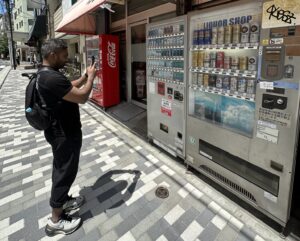
And I reached for the iPhone Air a lot. A lot.
Tokyo is one of those cities that rewards obsessive photography, especially if you care about architecture. I shot glossy storefronts in Ginza, layered facades, train station geometry, little pockets of shadow between clean concrete forms, and the sort of dense urban compositions Tokyo seems to generate without trying.
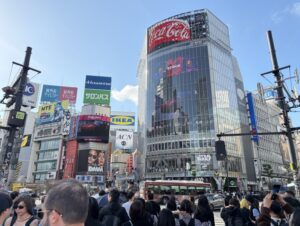
The iPhone Air’s 48MP Fusion camera was perfect for that kind of trip because it gave me flexibility without bulk. Apple says it delivers the equivalent of four lenses, with 28mm and 35mm focal length options, optical-quality 2x, sensor-shift stabilisation and next-generation portraits with Focus Control.
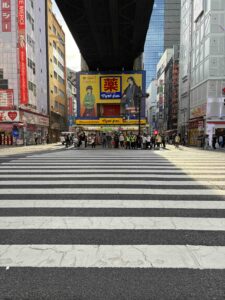
What that meant for me was simple: I could move fast, frame quickly, and still get photos that felt considered. It was especially useful in the kind of mixed lighting Tokyo throws at you all day — bright outdoor streets, covered arcades, narrow lanes, then soft interior light.
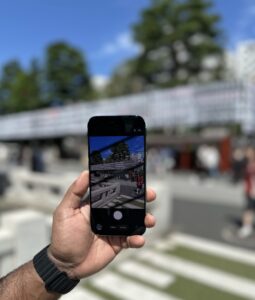
One of the clearest examples was Nakamise Shopping Street in Asakusa. Senso-ji describes Nakamise as one of the oldest shopping streets in Japan, and that sense of historical continuity really comes through when you are there. It has the weight and colour of a place that knows people will keep photographing it forever, which makes it weirdly fun to photograph anyway.
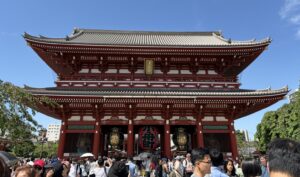
I found myself shooting the rhythm of the shopfronts, the movement of people, the signage, and the way the street keeps pulling your eye toward Senso-ji itself, which the temple notes is the oldest temple in Tokyo and draws around 30 million worshippers a year.
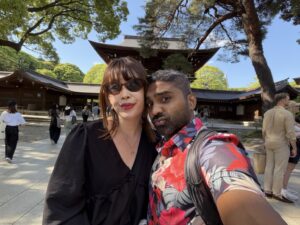
The iPhone Air’s camera made this easy because the phone never slowed me down. I could switch from a wider architectural frame to a tighter crop, capture quick food shots, then turn around for a cleaner, more graphic image without feeling like I was working around the camera.
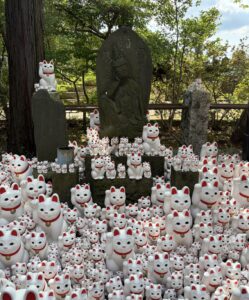
I also made time for the famous cat shrine, Gotokuji, and it was exactly the kind of place I love discovering on a second trip. It is quieter than Asakusa, more tucked away, and known for its maneki-neko associations. It also photographs beautifully, especially if you are drawn to repetition, objects, texture and little moments of visual humour.
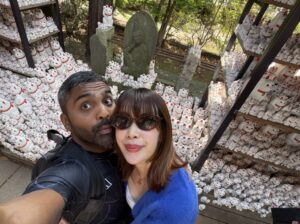
Again, the iPhone Air suited this perfectly. The 35mm option gave me images that felt a touch more intentional, while the phone’s stabilisation and low-light confidence helped when the light got softer or more uneven. Tokyo constantly gives you reasons to take “just one more” photo, and this phone never really argues with that impulse.
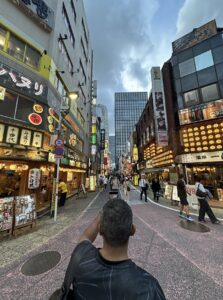
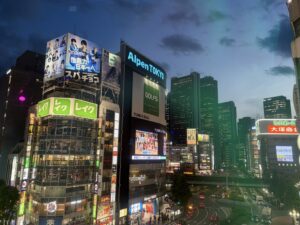
Then there was night. Tokyo from higher floors is ridiculous in the best way: layers of light, illuminated grids, distant towers, moving trains, streets that feel precise and cinematic from above. This is where I really appreciated both the display and the camera. The iPhone Air’s bright 6.5-inch ProMotion screen made editing and reviewing shots feel luxurious, and the camera held onto enough detail and atmosphere that I never felt I was sacrificing the mood of the city just because I was shooting on a phone.
Apple also says it supports 4K60 Dolby Vision, Action mode, Spatial Audio and Audio Mix, and while I was mostly there for stills, it is the kind of phone that makes you want to capture more of a place in motion too.
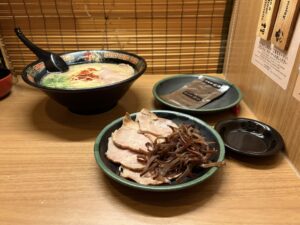
The other thing I loved about Tokyo was how affordable the food felt compared with Japanese food in Singapore. I ate extremely well without that constant low-level guilt that tends to shadow dining out back home. And because the city is so easy to move through, meals became part of the adventure instead of logistical stops.
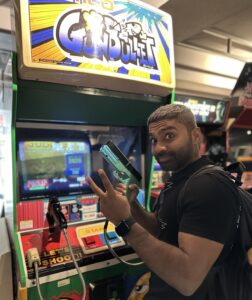
Same with the arcade district, where I happily lost time playing old-school games and feeling the kind of nostalgia only Japan seems to package so well. I even enjoyed shopping for football boots with AG soleplates, which are annoyingly hard to come by in Singapore. That was one of those oddly satisfying travel wins that only makes sense if you have been hunting for something specific for ages.
The final surprise was battery life. For a phone this thin, I expected to be nervous. I was not. Even with maps, photos, trains, browsing and constant screen use, the iPhone Air only drained about 50 per cent per day for me. Apple markets it as the most power-efficient iPhone ever, thanks to the A19 Pro, N1 and C1X chips and a redesigned internal architecture, and that claim felt believable on this trip.
I never had that sinking end-of-day travel feeling where your phone is limping toward red while you still need it for maps, tickets and one last dinner spot. In Tokyo, that kind of reliability matters. And with the iPhone Air, it felt built in.
The iPhone Air is still available – starting from S$1,599.