


Singapore is set to host a landmark celebration of independent watchmaking as Phillips, in Association with Bacs & Russo and The Hour Glass, presents George Daniels 100: The Genesis of Artisanal Watchmaking, an exhibition honouring the life and legacy of legendary British watchmaker George Daniels.
Taking place from 12 to 15 November 2026 at The Singapore EDITION, as part of IAMWATCH 2026, the exhibition will bring together 22 exceptional watches created by Daniels, marking their first reunion in nearly two decades.
The showcase commemorates the centenary of Daniels’ birth and offers collectors, enthusiasts and visitors a rare opportunity to appreciate the craftsmanship and innovation of a man widely regarded as the godfather of modern independent watchmaking.
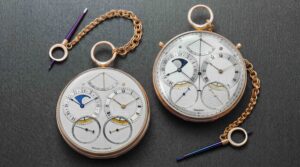
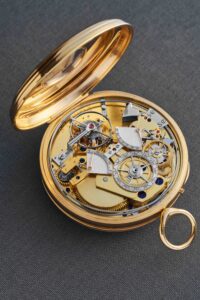
Among its highlights is the historic reunion of the Space Traveller I and Space Traveller II, two of Daniels’ most celebrated pocket watches, which will be exhibited together for the first time.
Celebrating a Pioneer of Independent Watchmaking
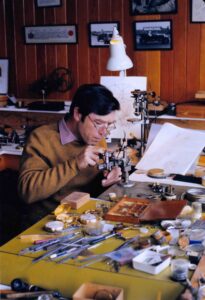
Born in 1926, Dr George Daniels CBE was a self-taught British watchmaker whose extraordinary technical abilities and dedication to traditional craftsmanship transformed the world of mechanical horology.
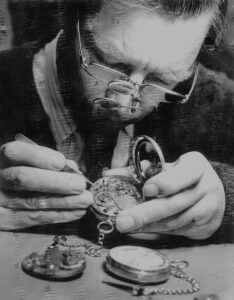
At a time when the watch industry was increasingly embracing mass production and quartz technology, Daniels remained committed to creating mechanical watches entirely by hand.
His approach was remarkable not only for its precision but also for the breadth of skills he mastered.
Daniels was proficient in 32 of the 34 disciplines required to make a watch by hand, allowing him to design, engineer, manufacture and finish nearly every component himself.
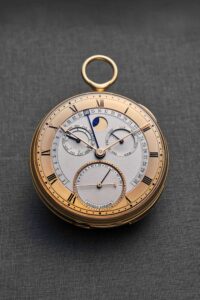
During his lifetime, he created just 24 pocket watches and two wristwatches, the Four-Minute Tourbillon and Spring Case Tourbillon, before continuing his Millennium and Anniversary series with his apprentice, Roger W. Smith.
Each watch required more than 2,500 hours of work, reflecting the extraordinary level of craftsmanship involved in bringing his creations to life.
His influential book, Watchmaking, remains an essential reference for generations of watchmakers, providing detailed insights into the techniques and philosophy behind traditional mechanical watchmaking.
The Revolutionary Co-Axial Escapement
One of Daniels’ greatest contributions to horology was the invention of the co-axial escapement, a groundbreaking development in mechanical watch movements.
The escapement is a critical component that regulates the release of energy within a mechanical watch, helping maintain accurate timekeeping.
Daniels’ innovative design reduced the mechanism’s dependence on lubrication, improving its potential for long-term precision and reliability.
It represented one of the most significant advancements in escapement technology since the development of the lever escapement by Thomas Mudge approximately two centuries earlier.
However, Daniels’ ambitions extended beyond creating an innovative mechanism.
He wanted his invention to be adopted by the wider Swiss watchmaking industry, a goal he eventually achieved through his collaboration with Omega.
The co-axial escapement remains one of his most enduring technical legacies, demonstrating how traditional mechanical watchmaking could continue evolving through innovation.
Space Traveller I and II: Two Masterpieces Reunited
The centrepiece of the Singapore exhibition will undoubtedly be the first-ever joint display of the Space Traveller I and Space Traveller II pocket watches.
Created in 1982, the two masterpieces represent different stages in Daniels’ pursuit of horological excellence.
The original Space Traveller was conceived as an extraordinary expression of mechanical ingenuity, combining sophisticated astronomical timekeeping with Daniels’ distinctive approach to watchmaking.
After selling the first watch, Daniels reportedly regretted parting with it and decided to create a second version.
Rather than simply reproducing the original, he took the opportunity to refine and expand the concept.
The resulting Space Traveller II introduced an additional chronograph complication capable of measuring both mean solar time and sidereal time.
While mean solar time corresponds to the familiar timekeeping system based on the Sun, sidereal time is measured relative to the Earth’s rotation against distant stars, making it particularly relevant to astronomy.
Integrating these different timekeeping systems into a mechanical pocket watch demonstrated Daniels’ extraordinary technical imagination.
The Space Traveller II remained his personal watch until he died in 2011.
Their reunion at IAMWATCH 2026 offers visitors an unprecedented opportunity to examine how Daniels developed and refined one of his most ambitious horological concepts.
Inspiring a New Generation of Watchmakers
Beyond his technical achievements, Daniels played a pivotal role in establishing independent watchmaking as a respected and highly sought-after field.
His philosophy challenged the idea that exceptional watchmaking had to come from large manufacturers or established luxury brands.
Instead, he demonstrated that an individual craftsman could create watches of extraordinary complexity, originality and artistic value.
His influence can be seen in the work of contemporary independent watchmakers who continue to push the boundaries of mechanical design and traditional craftsmanship.
Among those most closely associated with his legacy is Roger W. Smith, who trained under Daniels and went on to become a leading figure