


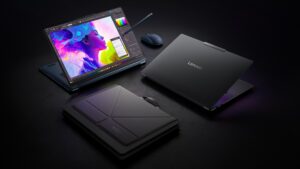
Lenovo is expanding its consumer AI portfolio with a sizeable collection of new PCs and tablets aimed at everyone from professional creators to students and families.
Unveiled across Lenovo Innovation World 2026, the new line-up includes the high-performance Yoga Pro 9n, convertible Yoga 9n 2-in-1, two new Yoga tablets, the colourful IdeaPad Vibe series and redesigned IdeaCentre AIO i desktops. Lenovo is also experimenting with how work can move between devices through its new Smart Canvas Concept.
While the hardware varies considerably, Lenovo’s broader idea is to make AI more personal and contextual. Its Lenovo Qira technology is being expanded across supported PCs and tablets, providing a common AI experience that can retain relevant context as users move between devices.
Yoga Pro 9n Brings RTX Spark to Creators.
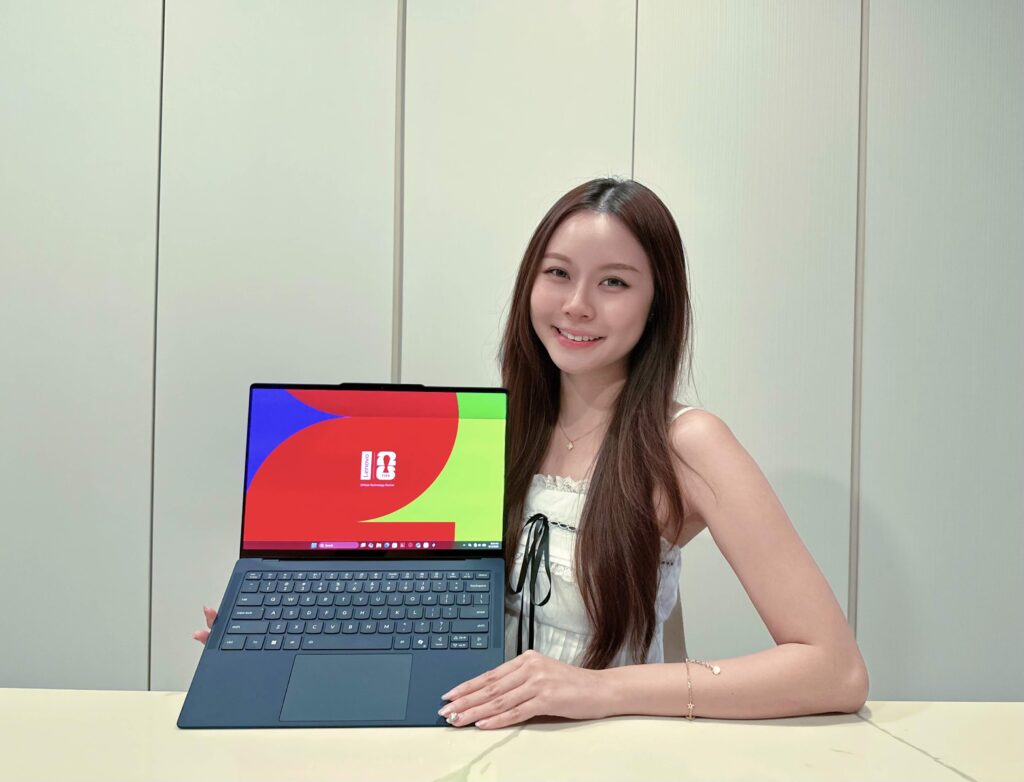
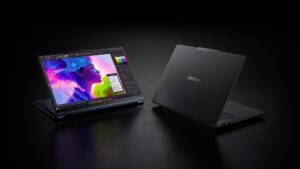
At the performance end of the new Yoga family is the Lenovo Yoga Pro 9n (15″, 11), designed for creators and developers who want to run demanding AI, content creation and development workloads locally.

Its biggest change is the adoption of NVIDIA RTX Spark, combining NVIDIA AI and RTX technologies with the CUDA software stack. Lenovo says the platform can coordinate multiple specialised AI agents to automate more complicated creative tasks across applications, rather than simply accelerating individual AI features.
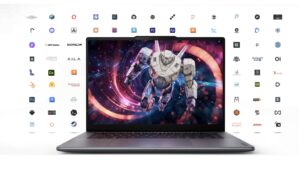
The machine can be configured with up to 128GB of 9400MT/s unified memory, while its NVIDIA Blackwell RTX GPU and Grace CPU are also intended to handle traditional demanding workloads such as high-resolution video editing, 3D rendering, software development and RTX gaming.
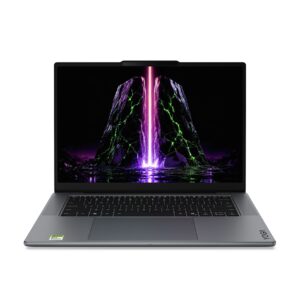
Visual work takes place on a 15.3-inch 2.5K PureSight Pro OLED display with a variable 48Hz to 165Hz refresh rate, up to 1,100 nits peak HDR brightness and 100 per cent P3 and sRGB colour coverage. Lenovo has also included a 9.2MP IR camera and a haptic Force Pad with pen support.
Yoga 9n 2-in-1 Lets Creators Draw on Two Surfaces.
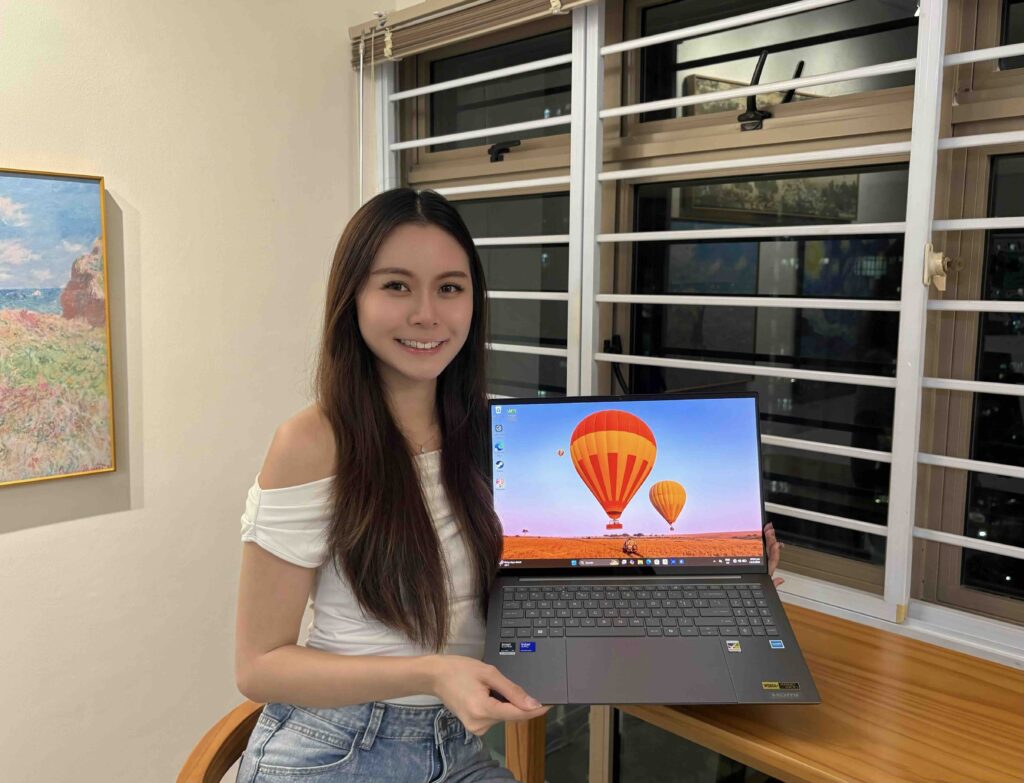
The Yoga 9n 2-in-1 (16″, 11) takes much of that performance and puts it into a more flexible 360-degree convertible.
It is also powered by NVIDIA RTX Spark, but comes with up to 64GB of unified memory. Its distinguishing feature is a dual-surface pen experience: users can draw or write directly on either the 16-inch OLED touchscreen or the laptop’s haptic Force Pad.
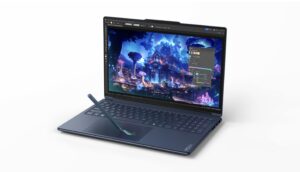
Used with the Yoga Pen Gen 2, the system supports tilt sensitivity, palm rejection and customisable controls. The 360-degree hinge lets it move between Laptop, Tablet, Tent, Stand and Canvas configurations depending on whether the user is typing, drawing, presenting or collaborating.
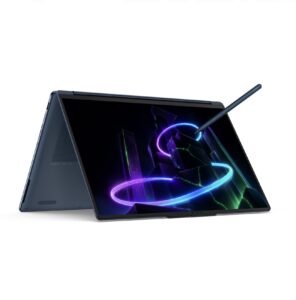
The 16-inch 2.8K PureSight Pro OLED panel runs at up to 120Hz, while a six-speaker Dolby Atmos system incorporates two tweeters into the rotating soundbar so they remain front-facing as the laptop changes position.
New Yoga Tablets Put the Pen First
Lenovo is also extending its creator strategy to Android with the Yoga Tab Plus Gen 2 and Yoga Tab Gen 2.
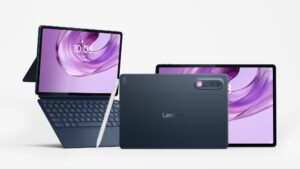
Both are built around pen, voice, vision and touch input, supported by features including Lenovo AI Vision, Qira, Smart AI Input, AI Creation Tools, AI Note and Live Transcript. Their stylus systems provide 8,192 pressure levels along with tilt detection and palm rejection, while gestures such as Click to Draw, Squeeze to Select and Flip to Erase are intended to make the pen feel more natural.
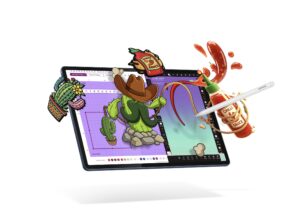
The higher-end Yoga Tab Plus Gen 2 combines a Snapdragon 8 Elite Mobile Platform with a 13-inch 4K PureSight Pro display and optional magnetic clamshell keyboard, positioning it as the more capable choice for artists and designers.
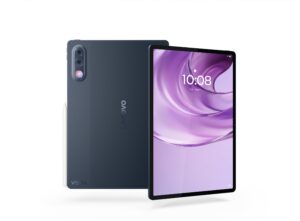
The Yoga Tab Gen 2, meanwhile, opts for portability with an 11-inch display and a weight of just 480g. It uses the MediaTek Dimensity 9500s and can be paired with the Tab Pen Pro 2 and detachable 2-in-1 keyboard pack.
Both launch with Android 17, with Lenovo promising seven operating system upgrades through Android 24 and security updates through 2033.
Smart Canvas Wants Ideas to Follow You Between Devices
One of Lenovo’s more experimental announcements is Smart Canvas Concept.
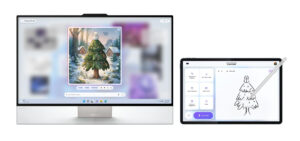
Rather than being another individual AI application, Smart Canvas is intended to create a workspace spanning compatible Lenovo devices.
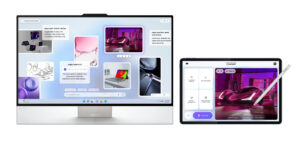
A user could begin an idea using voice, pen, camera or touch on one device before continuing it elsewhere as the project develops.
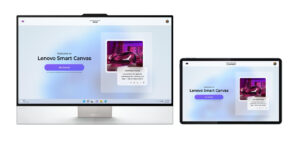
Lenovo demonstrated the concept using a Yoga AIO i Aura Edition and Yoga Tab Gen 2, illustrating how a tablet and larger desktop display could handle different stages of the same creative process.
IdeaPad Vibe Makes the AI Laptop More Colourful
Not every new Lenovo PC is aimed at professional creators. The new IdeaPad Vibe takes AI PCs in a noticeably more playful direction, with Lenovo placing as much emphasis on personal style as specifications.
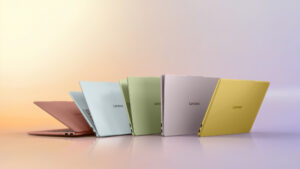
Developed in consultation with the Pantone Institute, the range comes in seven colours: Dreamy Violet, Spicy Gold, Zen Green, Chill Blue, Radiant Coral, Moody Blue and Lowkey Grey. Customisable keycaps will also be available separately for further personalisation.

Available in 14- and 15-inch sizes, IdeaPad Vibe can be configured with Snapdragon X processors and Copilot+ PC capabilities, with a metal chassis starting at 1.3kg. Selected configurations offer up to 24GB of memory, while OLED options provide up to 100 per cent DCI-P3 coverage. IPS variants can offer refresh rates of up to 120Hz.
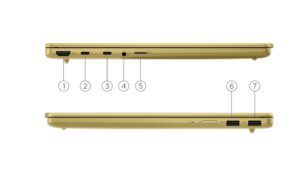
AMD versions will also be offered with up to Ryzen AI 400 Series processors, upgradeable memory up to 32GB and SSD expansion up to 1TB. Intel-powered models are planned for later.
Qira Connects AI With Everyday Apps
AI is not limited to hardware acceleration. On selected new Idea devices, Lenovo Qira can connect with services including email, calendars and collaboration tools through Workato-powered integrations.

The goal is to allow users to ask for information and take actions using natural-language requests without continually moving between different apps. Lenovo describes Qira as a personal AI experience that can work across supported PCs, phones, tablets and wearables.
It is a more practical interpretation of the AI PC concept: instead of AI existing as an isolated chatbot, Lenovo wants it to understand enough context from a user’s devices and services to help complete everyday tasks.
IdeaCentre AIO i Cleans Up the Family Desk.
For the home, Lenovo is also redesigning its IdeaCentre AIO i, available with 23.8-inch and 27-inch Full HD displays.
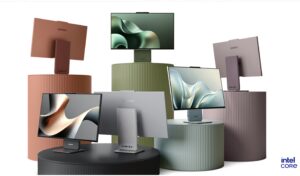
The new generation removes the bulky computing box traditionally positioned behind an all-in-one display, resulting in a cleaner silhouette. Displays support refresh rates up to 120Hz and 350 nits of brightness, while configurations can include up to 32GB of LPDDR5X memory and dual SSD slots.

Powered by Intel Core Series 3 processors with up to 40 platform TOPS of AI performance, the AIO introduces Lenovo’s AI Turbo Engine alongside Adaptive Lighting. Users can select Boot-up, Default and Music lighting modes and personalise the lighting effects and colours around their workspace.
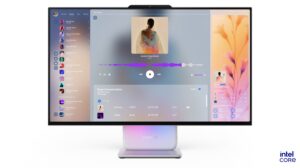
It also gains a height-adjustable and tilting stand, an optional 5MP IR camera with a physical privacy shutter, Harman audio, six USB ports, HDMI input and output, and optional wireless charging and touchscreen functionality.
Like IdeaPad Vibe, the AIO is becoming more colourful too, with options including Dreamy Violet, Radiant Coral, Zen Green, Chill Blue, Luna Grey and Cloud Grey.
Rolling Out From September
The Yoga Tab Plus Gen 2 is expected from September 2026 starting at €849, while the Yoga Tab Gen 2 starts at €649.
Pricing and availability for the Yoga Pro 9n and Yoga 9n 2-in-1 will be announced later.
The IdeaPad Vibe follows in October with an expected starting price of €799, while the IdeaCentre AIO i is expected in November, starting at €999.
Find out more at lenovo.com/sg.