



Apple’s original AirTag quietly became one of the most useful accessories in the Apple ecosystem. Since its debut in 2021, it has helped people recover everything from lost luggage and keys to bicycles and bags. The new generation AirTag takes that same idea and refines it in meaningful ways, making it easier than ever to locate the items that matter most.

At first glance, the new AirTag looks almost identical to the original. The familiar coin-shaped design remains the same. But under the hood, Apple has made several upgrades that make it noticeably more capable for everyday use.

I decided to attach the new AirTag to my car keys, which is honestly where a tracker like this proves its value almost immediately. Keys have a way of disappearing at the worst possible moment, especially when you are rushing out the door. With AirTag linked to the Find My app on my iPhone, I always know exactly where they are.
Stronger Precision Finding
The biggest improvement comes from Apple’s second-generation Ultra Wideband chip, the same technology found in the latest iPhone 17 lineup and newer Apple Watches.

In practical terms, this means Precision Finding works from up to 50 per cent farther away than before. When I tried locating my car keys using the Find My app, the experience felt more responsive. The app guides you with arrows, distance indicators, sound and subtle haptic feedback until you reach the exact spot where the AirTag is located.
Even when they were buried inside a bag or left somewhere around the house, the directions were clear and easy to follow.

Apple has also extended Precision Finding to the Apple Watch. If you are wearing an Apple Watch Series 9 or later, you can locate your AirTag directly from your wrist without needing to pull out your iPhone. It is a small convenience, but one that makes the feature even more practical.


Find My Network
AirTag continues to rely on one of Apple’s biggest advantages: the Find My network. This crowdsourced network consists of hundreds of millions of Apple devices around the world.
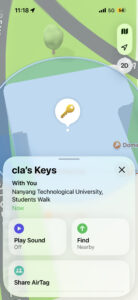
If an AirTag goes missing and is outside Bluetooth range, nearby Apple devices can anonymously detect it and securely report its location back to the owner.
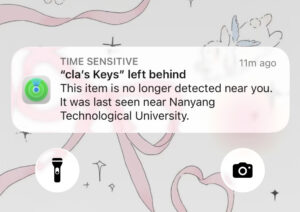
In practice, this system works remarkably well, especially in places where Apple devices are everywhere. It is the reason many travellers now place AirTags inside their luggage. Even if a suitcase ends up somewhere unexpected, the Find My network can usually help pinpoint its location.
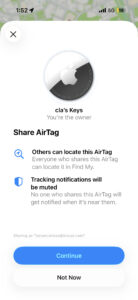
Apple has also introduced a useful feature called Share Item Location, which allows you to temporarily share the location of your AirTag with trusted third parties.
For example, if your luggage is delayed, you can share its location with an airline’s customer service team to help them recover it faster.
Privacy and Anti-Tracking Protection
Privacy remains a key focus. AirTag is designed specifically to track objects, not people. Several safeguards are built into the system to prevent misuse, including alerts if an unknown AirTag is detected travelling with you. Communication within the Find My network is end-to-end encrypted, meaning only the owner can see the AirTag’s location.
Sustainable Design
Apple has also made improvements on the environmental front. The new AirTag uses 85 per cent recycled plastic in its enclosure, along with 100 per cent recycled rare earth elements in the magnets and recycled gold plating in its circuit boards.
The packaging is now fully fibre-based and recyclable, aligning with Apple’s goal of becoming carbon neutral across its entire product footprint by 2030.
Overall, the new AirTag’s stronger Precision Finding range and improved speaker make locating items faster and less frustrating.
Pricing and Availability
The new AirTag will be available soon in Singapore, on apple.com/sg.
• S$45 for a single AirTag
• S$149 for a four-pack